You might have heard us talking about it recently, but if you didn’t know, we’ve just launched our Trint MCP Connector. And of course, innovations like these don’t come without some serious brain power and troubleshooting from our team. So we thought we’d reach out to them and chat first hand to the people who gave us the Trint MCP.
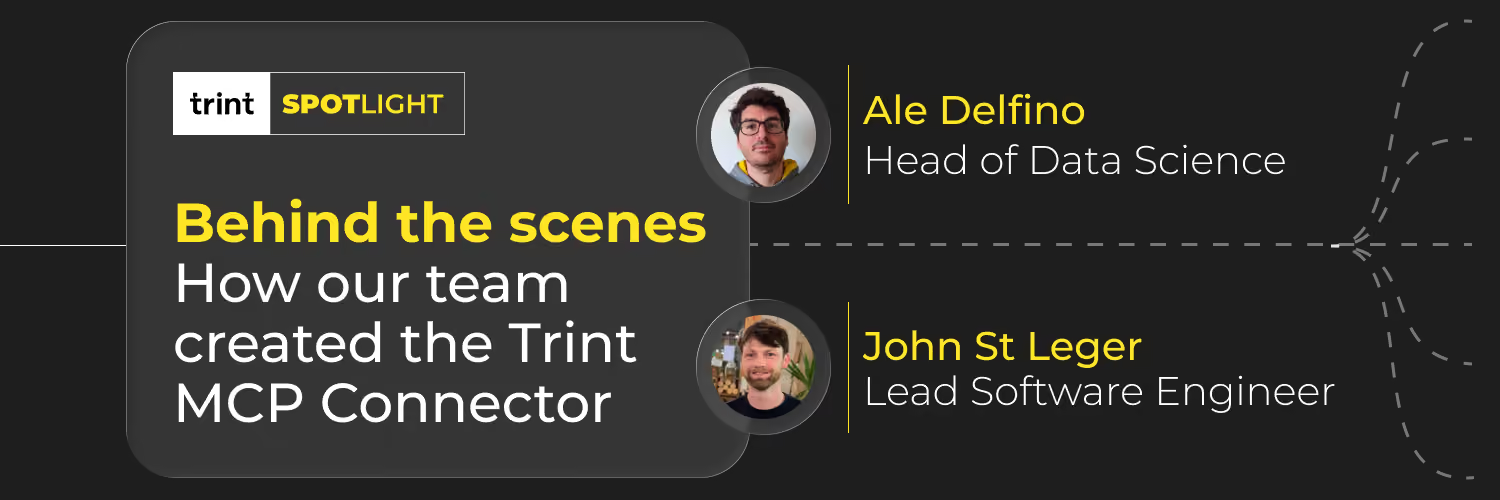
Meet Head of Data Science Ale Delfino and Lead Software Engineer John St Leger – just some of the people behind bringing the MCP Connector to life. They cover why an integration like this is necessary, how it can benefit newsrooms and media productions, plus some insights into their favourite features of the MCP.
And you’ve probably guessed by now, we used Trint Live to record and transcribe this interview plus the MCP Connector to playback the best quotes and render them into soundbites we can use.
Ale: Well it was really a no-brainer to build the MCP Connector for Trint. There wasn’t really an option because everyone in the industry is building MCP’s and it’s the current standard to connect agents to products. We knew we had to have one – it’s never been a question of if we will, just when really.
We knew we should build it because this is the future. We see more and more people using MCP’s – even within our team, in our day-to-day work when we use Claude for example, we want it to be able to interact with other tools and an MCP is the interface that allows this to happen.
John: An agent is only as smart as what it has access to. Say you're starting a research document — these days you go straight to an agent to dig into a topic. Trint already holds a wealth of information: all the media you've uploaded for that project. That's what makes the Trint MCP useful — it gives the agent access to that content, so it can search and surface the best parts; then you can talk through what's unique about it, all from what you've already stored.
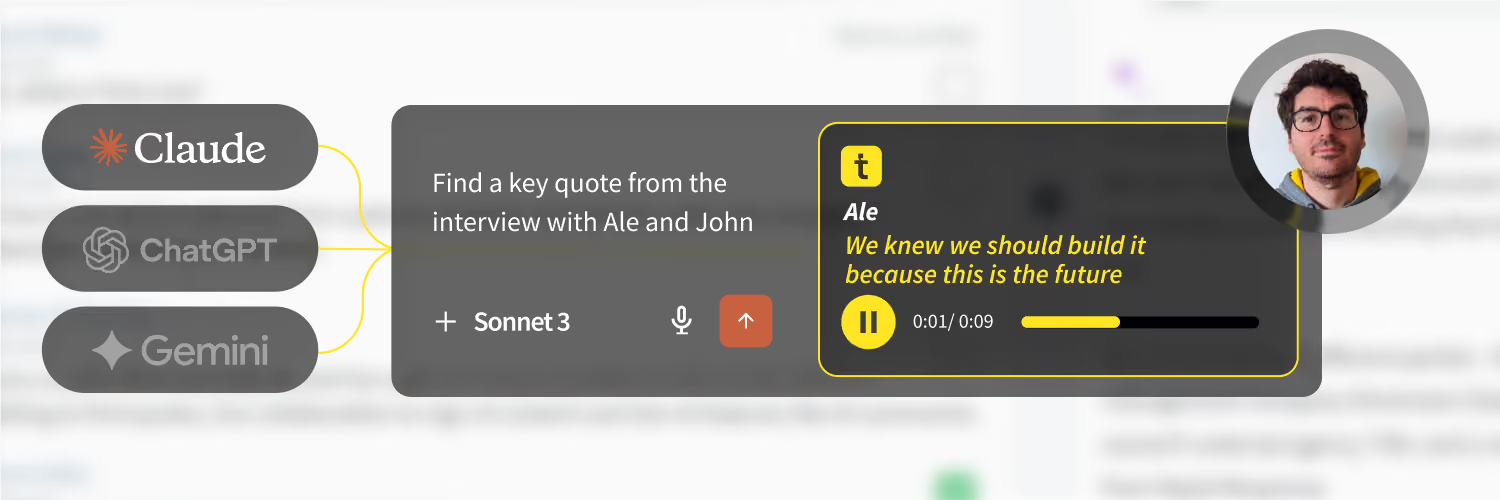
Ale: At Trint, I can see we started experimenting around a year ago.
John: There's a bit of a gap between when MCPs launched as an emerging standard and where they are now: an accepted one, where people expect your system to have an MCP interface.
Ale: And now we have our MCP approved in Claude store, with other agents to follow. This means the MCP will show up in those agents' libraries, making it easier for users to connect.
Ale: Right now, we’re working on getting our MCP approved in these other agents libraries. So the MCP Connector can search, highlight, show quotes, play video and we want to extend all the tools that are available in the MCP so that the user can do even more with it.
John: The long-term goal is pulling content together around a topic, explaining why it's relevant, and citing it back to source. That citing matters more than ever, with fake content and AI generated content everywhere, you need to confirm what's actually being said. In a newsroom or media production, you have to know what you've cited is correct.
Ale: And for me, I think if we go back to our users’ workflows, we’re primarily removing a lot of copy-paste moments for them. It can be such a long process, going from Trint to their agent of choice and back again, that the user might typically feel they are wasting time that could be spent elsewhere. This way, the agent can pull all the data from Trint and allows users to work in one place, removing the need to copy-paste across different tools.
Ale: My favourite thing is the quote player, not just because it looks cool but it enables the Trint UI to sit inside the different agents with a standard look across each of them.
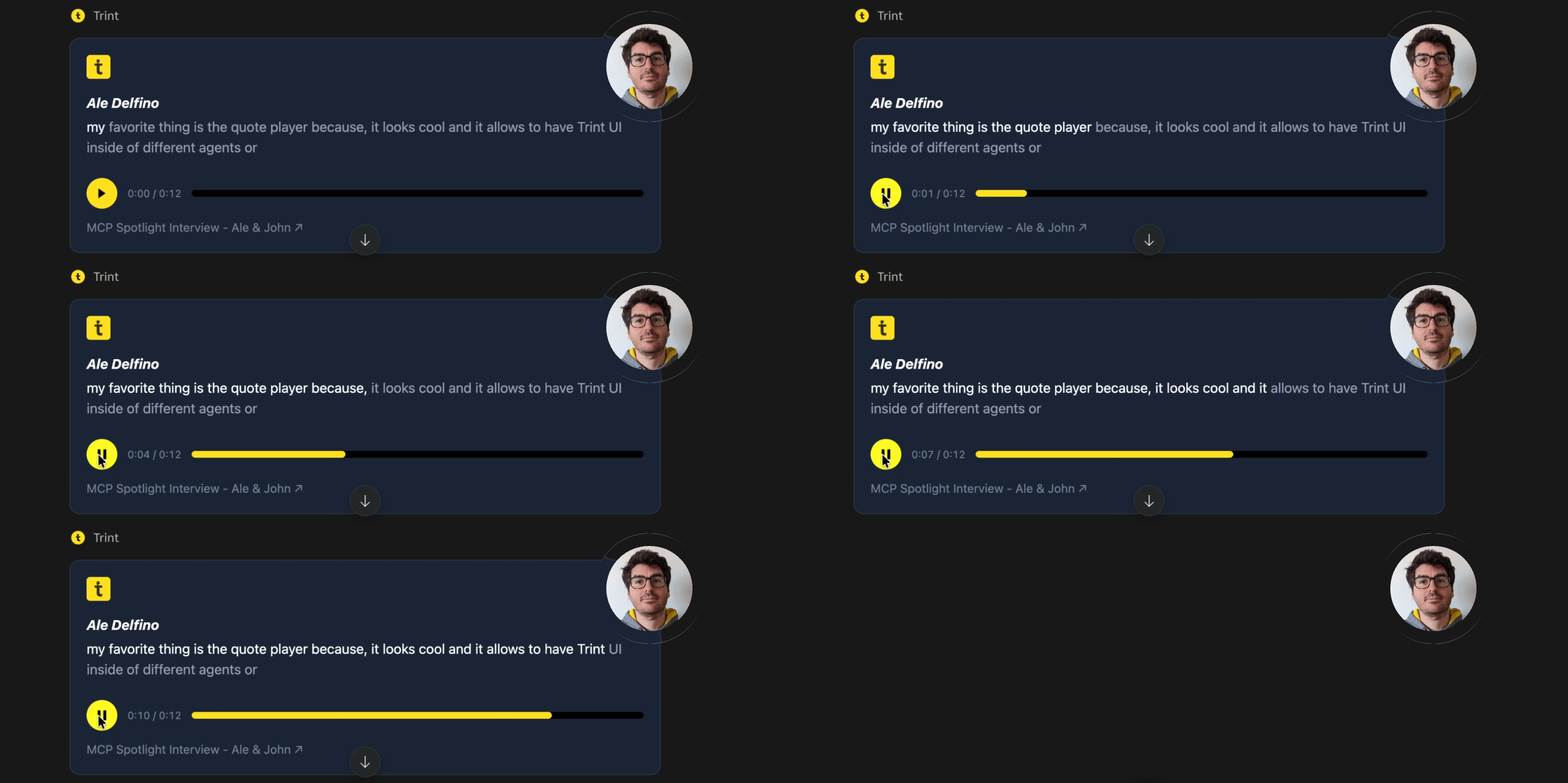
John: I agree, I think the player is an interesting one because it opens up lots of avenues. For instance when you create stories or research documents in the future you can render them and be able to playback the content so that’s exciting.
And then in the future I think it’ll be just expanding on our usage of the MCP so being able to interact with an agent after it’s found those quotes and say, “Can you extend on that topic” or “That’s not quite in scope for today, can you find me something else…” that kind of thing. Really working with the agent and media files like a collaborative pair.
Ale: I think that the main challenge when you’re building something from scratch is that you don’t know what it should look like in the end. You have the idea and you build something bespoke and then it takes a while to generalize. For example we spent a lot of time just renaming the tools and extending what the tools do.
It’s difficult to find a set of tools that are general enough that the agents can use it but they are also specific enough so that they are actually useful. So we’re talking about searching files, getting file content, list workspaces, and all of the other metadata Trint supplies.
John: Think of the MCP Connector as a toolbox, with a drill, a screwdriver etc. Handing someone the toolbox isn't enough; they need instructions for building the shelf. That's the Skill. The tools get you there, but the Skill tells you how. We're releasing skills soon so users can install them in their own agent.
John: I've been reading The Bitter Lesson by Rich Sutton. The idea that instead of throwing more resources at a model, you let it make a change, read the result, and iterate fast on its own experience. As compute grows, results should keep improving. For us that means building tools good enough that when an agent writes a story, it can pull the content, edit it, and iterate quickly. The risk is over-focusing on one output when the real gain is making sure it keeps getting better over time.
Ale: And sort of on this topic, as a user of MCP connections, you can easily tell when an MCP server is useful and done well, and when it’s not. Writing an MCP server is fairly easy, but writing a good one is more difficult, because of the points that John has just said. You want to capture all the possible uses so that as many people can use it for whatever their use cases may be.
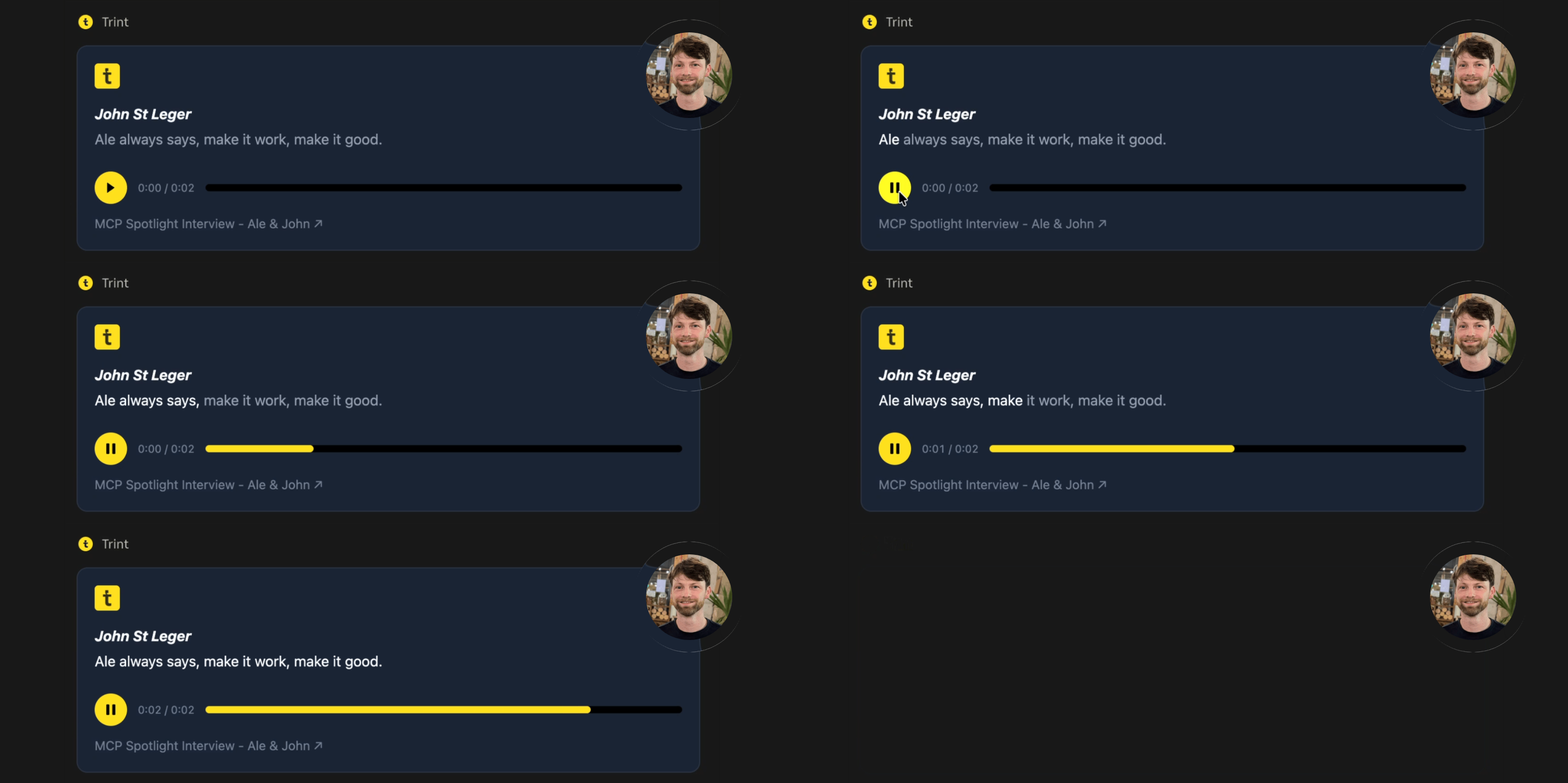
John: As Ale always says ‘make it work, make it good’. Or beyond good in our eyes.
le: There’s a few things we want to release, like creating story documents inside Trint. That’s pretty exciting and going to be a great addition to the tool. Also, we want users to be able to ask their AI agent to generate content inside Trint too, so we’re looking into that. We definitely want people to be able to create content inside Trint and share it and edit it collaboratively, and they should be able to do this with the use of their AI agent too.