Want the full story from the IBC show floor? Read Tessa Kaday’s write-up:
Context is the new infrastructure: what the Story Object Model launch told us at IBC 2026Read the article
Every system in your newsroom should know what the story is. The Story Object Model is the new open standard that gives each tool in your workflow the same, up-to-date picture of a story, and Trint is helping build and develop it.
See how it worksWatch Trint, LiveU, Reuters, Octopus and Mimir work from one shared story.
One shared record every tool can read
The Story Object Model is designed to stop that happening.
For decades, newsrooms have relied on MOS, the protocol that lets the newsroom computer system talk to playout, graphics and more. While it’s done a great job of connecting systems operationally, it was never built to carry editorial context – what the story is, what’s changed, what’s been verified plus what really matters right now.
That’s the gap that has always cost time, and in the era of AI agents, it costs a lot more. When an agent doesn’t understand the story, it can’t respect your editorial standards, your legal obligations or your rights restrictions.
In short, the Story Object Model (SOM) is an open standard for sharing story context across newsroom and production systems and AI agents.
In an even shorter sentence, SOM is a common format that any tool can publish to and read from.
Instead of each system having its own partial version of a story, the story itself becomes a shared object that every system can subscribe to.This means that when something changes at any given moment, everyone on the story bus hears about it.
One way to think about it is MOS in the age of AI. Where MOS gave newsroom tools a shared language in the 1990s, SOM’s aim is to do the same for the agentic era but this time with an editorial language rather than just operational.
Operational language
Moves the rundown
Editorial language
Shares the story
MOS moves the rundown, SOM shares the story.
Not the file, clip or rundown item. The story with everything that belongs to it, is the key element at the center of the whole process.
This is the thesis behind SOM. What a story is, what’s changed and what matters now should be something your systems can rely on. A single language that gives a shared context to every tool a newsroom uses.
SOM isn’t a product, and it doesn’t belong to any one vendor. Part of the reason it works is that it’s being defined by broadcasters, publishers and technology companies together, so it works across tools, vendors and clouds.
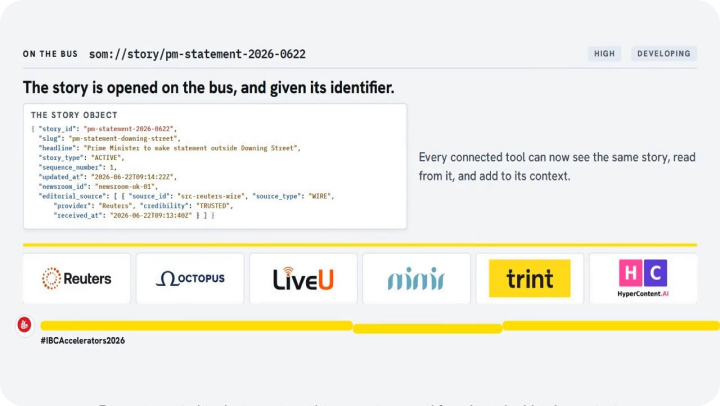

It gets its own identifier, and every connected tool can now see it, read from it and add to it.
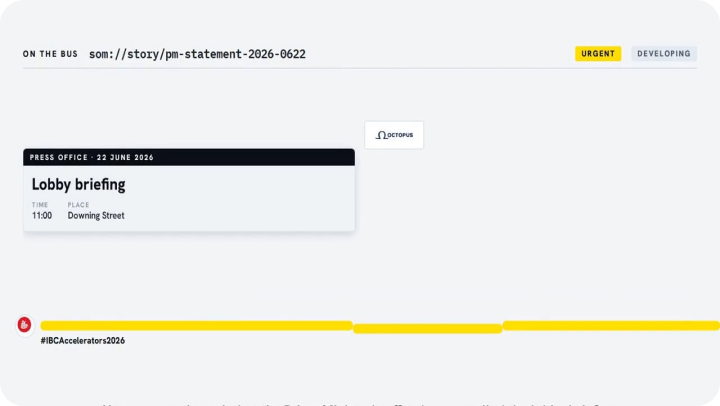

News comes through that the Prime Minister’s office has canceled the lobby briefing. The story goes urgent.
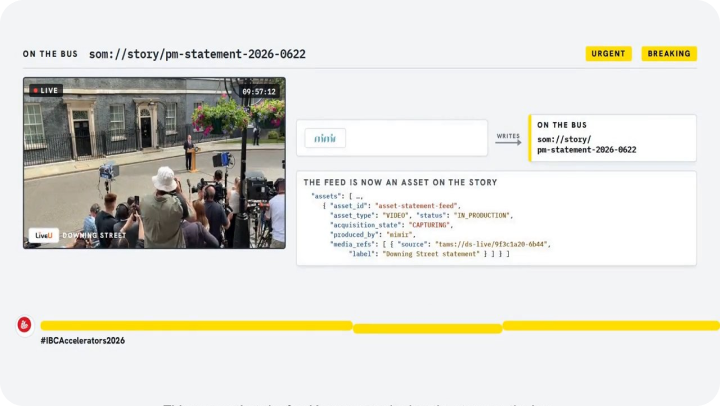

LiveU reads the story from the bus, and the camera feed outside Number Ten becomes an asset on the story.
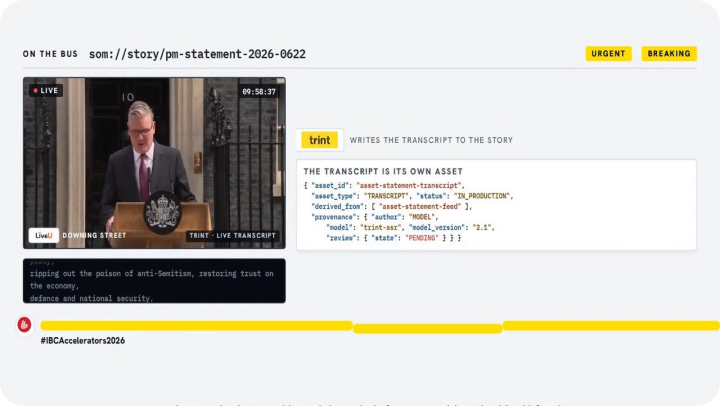

Trint transcribes the live feed and writes it to the story, recording that an AI model made it.
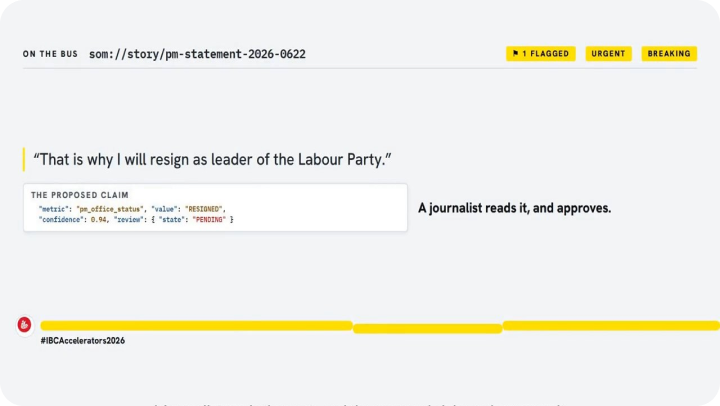

A journalist reads the quote and the proposed claim, and approves it. One approval settles three things.
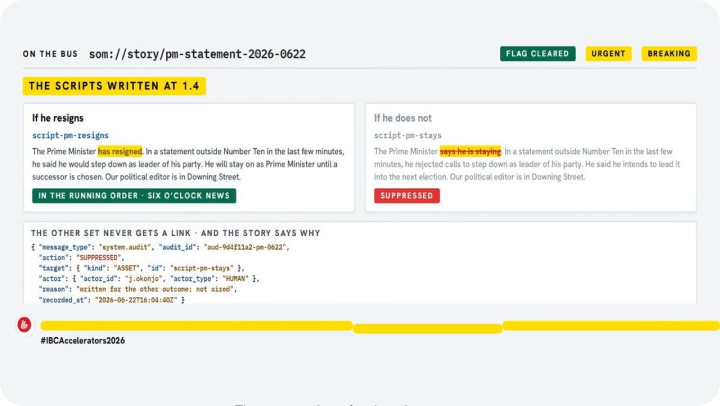

Mimir cuts the clip, the right scripts commit to air, the wrong ones are suppressed with the reason recorded.
To understand the Story Object Model, start with the three moving parts:

Every story gets a single, shared record of everything that matters about it:

The bus is the name for the channel every tool plugs into. When something happens in the story, a tool publishes it to the bus. Every other tool attached to that story then hears about it and can act without hassle.

These turn editorial judgment into something machines can follow. You add your guidelines, legal rules and house style to become machine-readable so that every tool and agent is able to work within them.
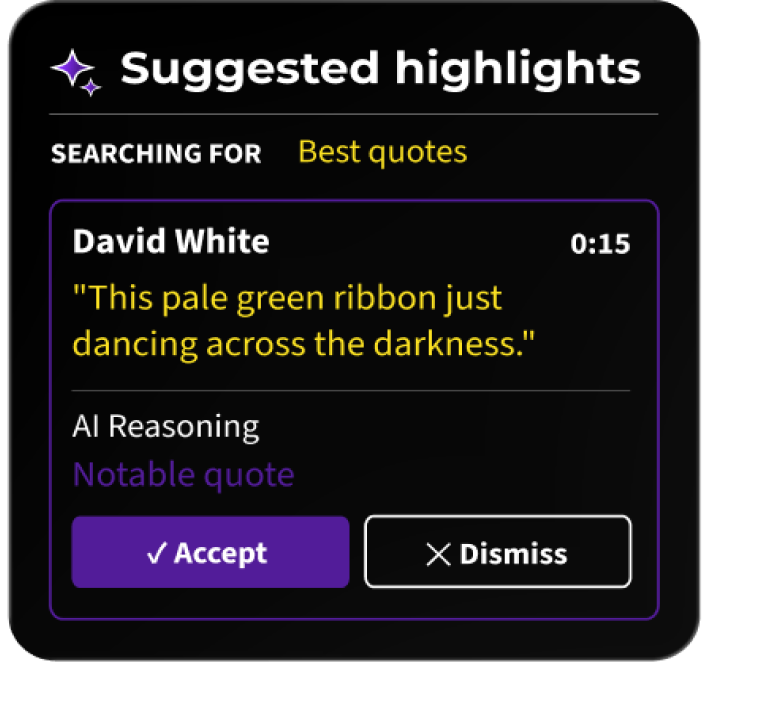

AI agents listen to the bus and can act on it, suggesting archive clips, building a first draft and reframing for social media, but they can only suggest. Every suggestion lands in front of a human to approve, tweak or reject.
Outside Number Ten.
Nobody knows whether he resigns
until he says it.






The Story Object Model is so much bigger than any one vendor. It’s about defining how broadcast and newsroom workflows will work for the next decade. That’s why we know it’s work worth doing together.
We’re proud to be a participating technology partner in this Smart Stories project, working with broadcasters and fellow vendors to shape the standard and show it working in live, end-to-end demos.
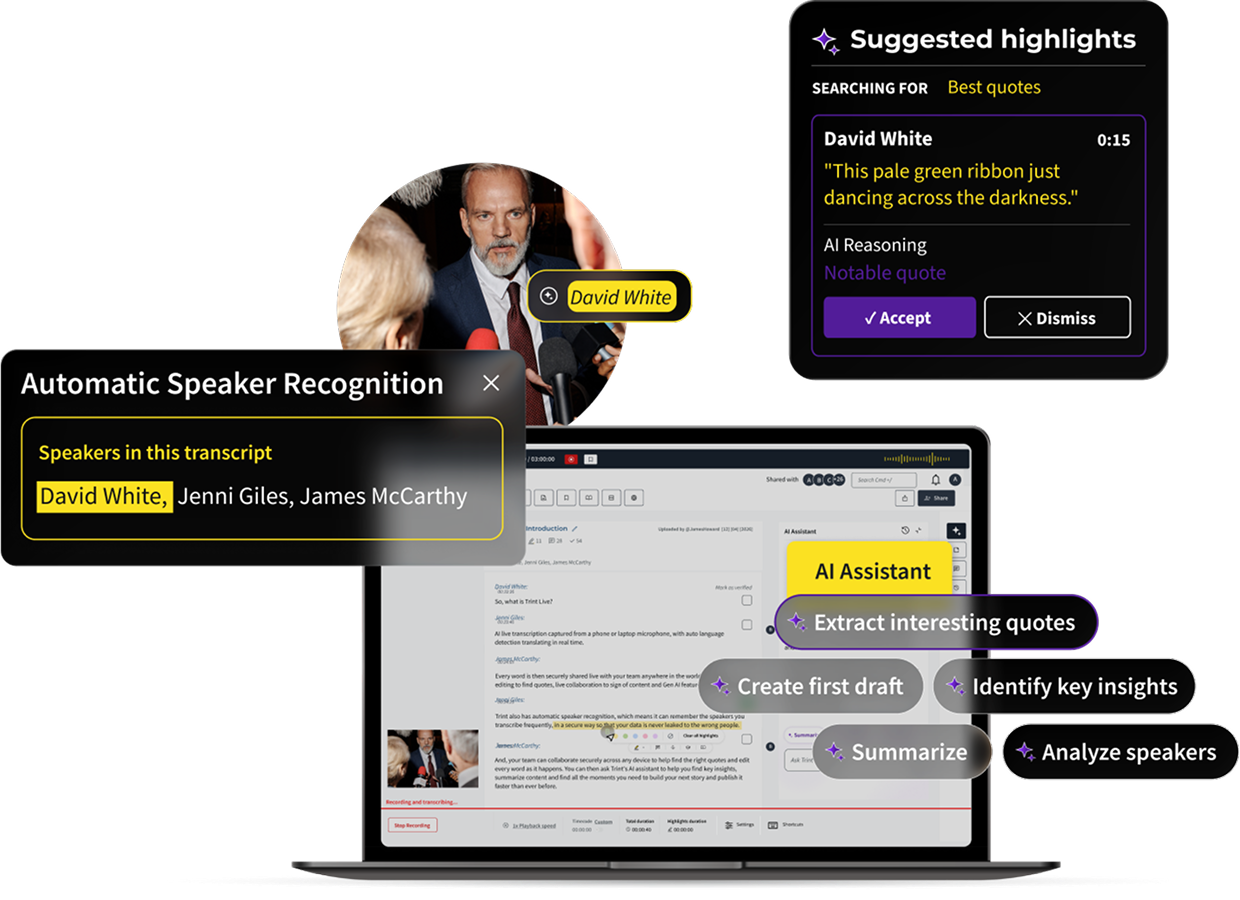
Interviews, press conferences, live feeds, field recordings: that’s where the quotes, names, facts and key moments lie. Trint turns that raw audio and video (live or pre-recorded) into searchable, verified, structured information. In a SOM-connected newsroom, that information doesn’t sit in a file waiting to be found. It actively becomes part of the story itself, available to every tool and agent that needs it.
That’s how a transcript goes from being a file to being the context.
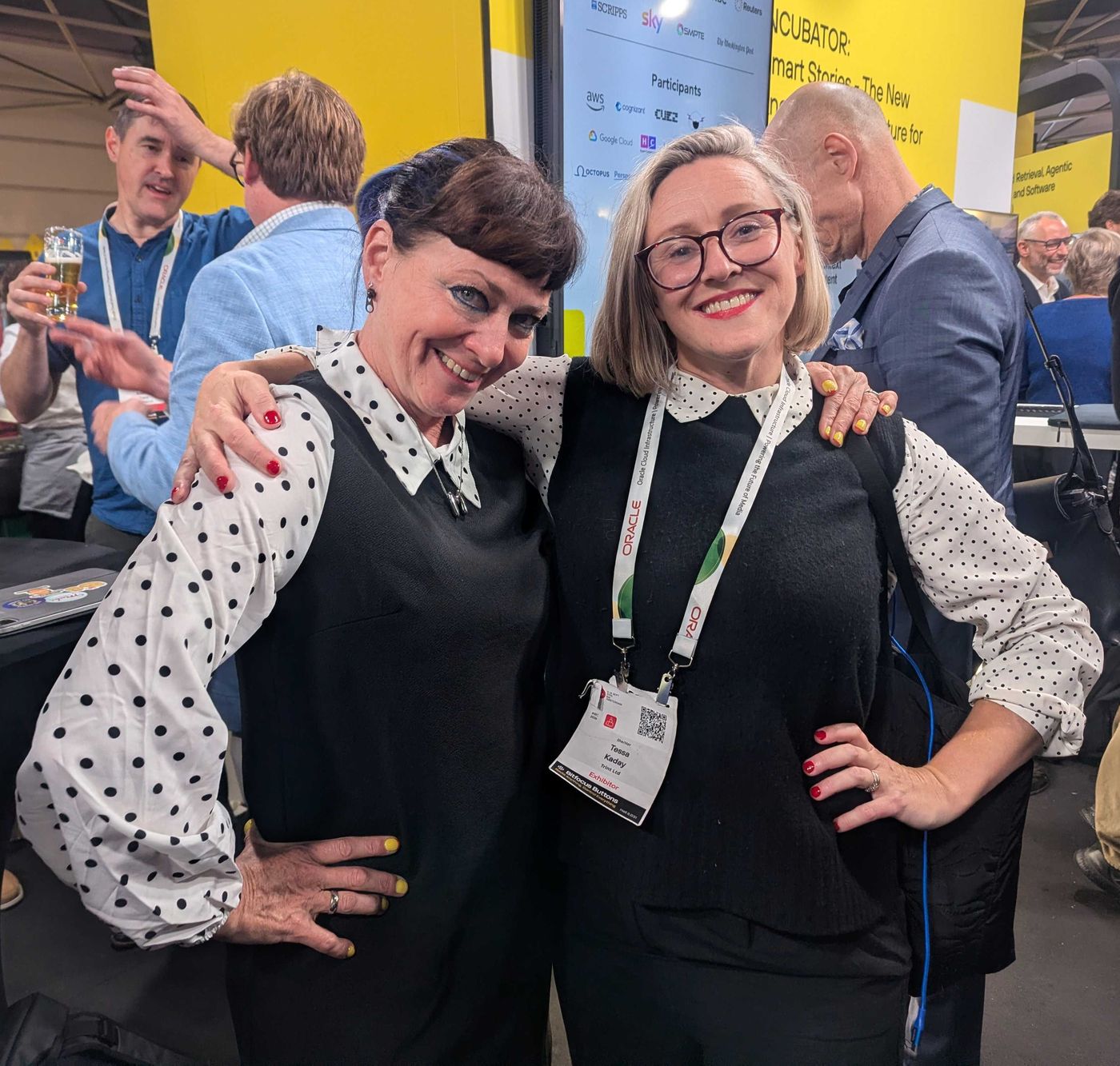
Want the full story from the IBC show floor? Read Tessa Kaday’s write-up:
Context is the new infrastructure: what the Story Object Model launch told us at IBC 2026
Less time lost on duplicates, faster turnaround on breaking news, and a clear path to using AI agents while retaining editorial control. Journalism back in the hands of those who do it best.

No more reproducing the same information in multiple systems. When the story changes, your tools already know and are already working on it.

Archive content actually gets used, linked directly to new stories as they develop. When a rights flag changes, it reaches every version that used that asset, including edits that have already been cut.

An open standard, built across vendors and clouds. Integrate once and connect to many of the systems you already run.
No one understands how important trust is better than journalists. That’s why editorial control is built into the Story Object Model right from the start, including:
Using Skills, your editorial standards, legal requirements and house rules become something every agent works with.
Each change reaches everything working on the story, so a correction in one place doesn’t leave an error lying in wait somewhere else.
Agents suggest and humans approve, reject or edit at every stage so nothing goes out without a human seeing it first.
Every version of the story is tracked, so you can always see what went out, when.
The project is led by ITN, NBCUniversal, the Associated Press and the BBC, championed by organizations including Reuters, Sky, ITV, Channel 4, Al Jazeera, The Washington Post, the EBU, SMPTE, Scripps and GC-SC, supported by technology partners including Trint.





























FAQ Answer
The Story Object Model (SOM) is an open standard for sharing story context across newsroom systems and AI agents. It gives every tool context and a common format to publish to and read from, meaning they can all work from the same understanding of a story as it develops.
No, SOM is an open, vendor-neutral standard developed through the IBC Accelerator Smart Stories project. We are one of the technology partners helping to define it in its early stages.
Along with the reverse acronyms, MOS and SOM are different. MOS connects newsroom systems operationally, where SOM adds an editorial layer. In short, MOS moves the rundown, SOM shares the story.
No, the point of an open standard is that the tools you already use can connect to it, meaning they can share context without replacing the tools you already work with.
The project is led by ITN, NBCUniversal, the Associated Press and the BBC, championed by organizations including Reuters, Sky, ITV, Channel 4, Al Jazeera, The Washington Post, the EBU, SMPTE, Scripps and GC-SC, supported by technology partners including Trint.
Talk to our team. We’d love to hear about your newsroom workflow and share what we’re learning as SOM continues to develop.

Talk to our team about SOM integrations and jump on the bus.