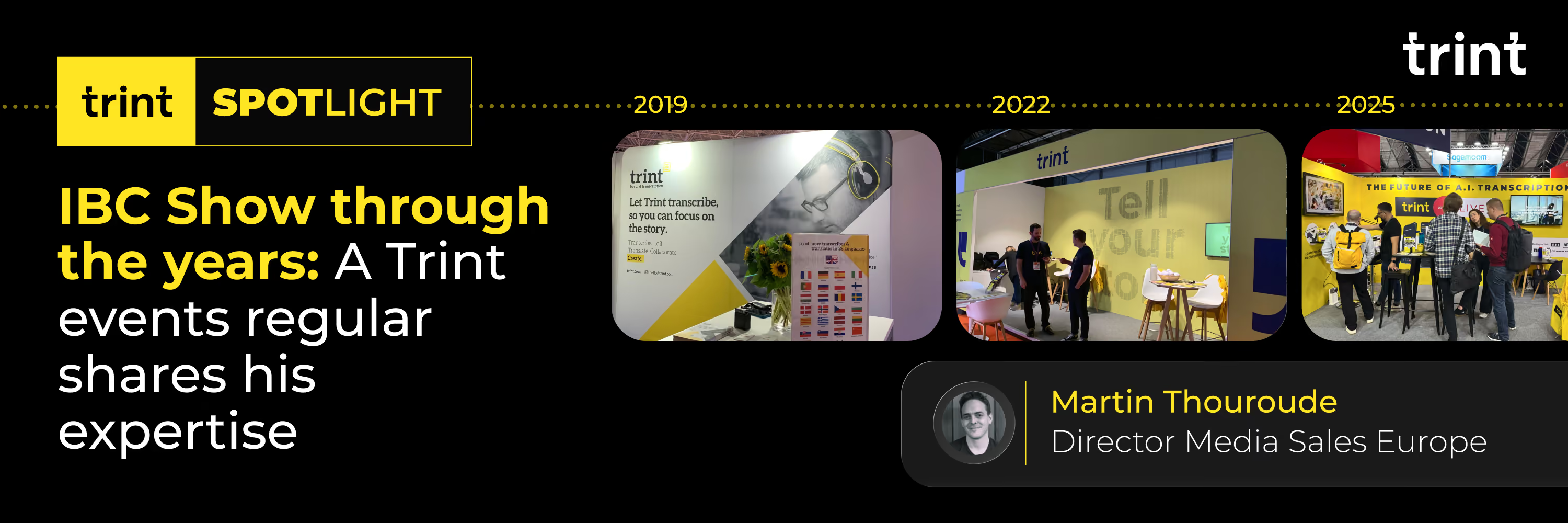
For starters, I’ve been attending the IBC Show with Trint since 2019. That fact alone got me thinking about what’s the biggest change I’ve noticed since that time. And I think the most obvious one is foot traffic at our booth. We were still introducing ourselves back in 2019, meaning a lot of conversations started with questions around what Trint is and what Trint does.
Nowadays, event attendees come to us already knowing the product, often already using it. This tends to mean our interactions are more about workflows, integrations and what’s next for Trint. Looking at that shift alone, we can see how much AI-assisted transcription and editorial tools have moved from ‘nice to have’ to crucial infrastructure in newsrooms.
From memory, I was doing a lot more category education back then – explaining why automated transcription mattered, what it could realistically do and where it still needed a human in the loop.
Today, the conversations are much more specific and the general knowledge around AI transcription has shifted so much. Now we talk more about the sovereignty of data, how Trint fits into an existing stack alongside other tools and how newsrooms can structure permissions across large teams. The questions have gotten more detailed and specific because the buyers have only been gaining more knowledge around this industry, as we have.
Two things stand out. First, tab fatigue is over. Newsrooms aren’t rewarding tools that do one thing well in isolation anymore. They’re rewarding tools that merge into a workflow they already use. That’s why we’ve embedded Trint into Mimir, Octopus, Saga, LiveU and other similar platforms, and also why we’ve built the Trint MCP Connector – so AI agents and agentic tools can pull Trint data straight into whatever environment the team is already in, instead of opening that extra tab.
My second thought is that data sovereignty has moved from footnote to opening question. European broadcasters ask upfront where the data is hosted, if anything trains on our content and what happens under EU regulation. What was once information buried at the end of a deal is now often the first thing raised at the booth.
In the earlier days of Trint, we were selling a feature – fast, accurate transcription. Now we’re selling an entire AI connected media production workflow. So that’s quite a change, while the core of Trint has stayed the same.
It’s become a more strategic conversation than just a product demo (while our product demos are still a key part of our event showcases). We’re showing how entire newsroom and production teams can move from raw footage to a published, searchable, multi-format story faster.
Making the trip to IBC every year still makes a difference, mostly because nothing replaces being there, in the room. All the emphasis on AI and remote tools in recent years has made these shows feel more crucial than ever. Trade show conversation has a completely different feel to a video call. You can read body language, catch offhand comments that tell you those candid thoughts and meet more people from across the business sectors and companies.
I love a face-to-face meeting as more often than not, it changes the sales conversation. On video calls people can be slightly guarded, especially when there’s a screen and an agenda between each of us. In person, it’s typically much more relaxed. People tell you what’s actually broken in their window, not just what’s on the RFP. And you get to read the room in real time – that’s something you just can’t beat.
There’s also something that happens over and over at these shows that never gets old. And that’s the reaction when someone sees our live workflow working at our booth for the first time. Almost every time you get this half-second of disbelief, followed by genuine excitement. Sometimes, software demos at trade shows just get polite nods, but other times they get a proper, tangible reaction.
A few things have shifted when it comes to the kinds of people we see at the booth over the years. Of course, there’s the brand recognition that’s completely different now to how it was back in 2019. Then, we were often introducing Trint for the first time, where now most people who stop by already know the name or have heard of us from a colleague. That alone can change the course of the conversation.
We’ve also seen the roles change, where previously it was innovation or R&D people, now we’re more likely to see someone from editorial operations, IT or procurement. These people will be asking more questions about deployment and security rather than whether the technology works or not. That’s another sign that the category has matured and democratized with AI-assisted transcription becoming an expected infrastructure.
The parts of IBC that I’m looking forward to most is the simple stuff. Catching up with customers we’ve known for years, meeting new people at the booth, and getting through all the coffees and stroopwafel! That mix is what makes the week.
If you’re heading to IBC or SVG, let’s chat. Book some time with me here.