Long-form video is packed with valuable information, but much of it remains hidden unless it's turned into structured text. Search engines have long been a key gateway for content discovery, and as AI tools increasingly sit alongside them, transcripts are becoming even more important for visibility and reuse.
In this guide, we'll explore how to use transcripts to optimize your content for SEO and discoverability. Plus, how an AI-powered transcription tool like Trint can accelerate your content creation process.
How search engines use transcripts
Search algorithms are clever, but they can't watch your videos. They can only rely on text to understand what it contains. So, while titles, descriptions and metadata provide some context, much of the valuable information remains invisible unless it's converted into searchable text.
This is where transcripts play a crucial role. Tools like Trint transform spoken words into structured, searchable text, giving search engines a much clearer picture of what was said. Names, topics, quotes, statistics and key talking points all become searchable, helping search engines understand the full story rather than just the headline.
Crucially, transcripts expand the range of keywords a video can rank for. A title might target one or two core terms, but spoken language naturally includes related phrases, variations and longer search queries that would rarely, if ever, appear in metadata alone. When those words are captured in a transcript, they create additional opportunities for your content to appear in search results.
For long-form video, this is especially important. A single video might cover multiple themes. For instance, a 30-minute interview with a football manager might cover transfer discussions, injury updates and tactical analysis. Different people will search for different moments from the same video. A transcript helps search engines identify those individual topics and connect them with the audiences looking for them.
The radio show This American Life saw the benefits of transcripts firsthand. According to David Schneider of SearchEnginePeople, transcripts account for 6.68% of the search traffic to the show. In short, well-transcribed video or audio is more likely to be understood accurately by search engines, appear for a wider range of search terms and be discovered.
Helping AI understand your content
It's not just search engines we need to think about. Search is evolving, and more people are turning to AI tools to find information, summarise content and get straight to answers.
ChatGPT alone handles around 2.5 billion prompts every day. Research from Ahrefs estimates that roughly 65% of these queries are search-related, meaning ChatGPT's search volume is already equivalent to around 12% of Google's.
Unlike search engines, AI tools don’t just return a list of links. They interpret and reshape information into direct responses. That makes transcripts essential. They give AI systems the raw material needed to understand what was actually said. Without a transcript, most of the details inside a video can easily be missed.
Well-structured transcripts also improve how reliably content can be referenced or summarised. Clear language, accurate speaker identification and properly formatted sections make it easier for AI systems to interpret.
This matters for accuracy. When content is unclear, poorly transcribed or missing context, it increases the risk of misinterpretation and misinformation. In fast-moving news environments, where clips and quotes are often reused out of context, structured transcripts help preserve meaning and reduce the likelihood of misinformation spreading from incomplete or misrepresented excerpts.

Accuracy, reliability & SEO
Search visibility isn't just about keywords. Search engines and AI systems are increasingly designed to favour trustworthy, authoritative information.
Accurate transcripts can support these signals by creating a clear and reliable record of what was said. When a whole conversation is captured correctly, word-by-word, it helps to preserve context, attribution and meaning, reducing the risk of information being misinterpreted or taken out of context.
This delivers the trustworthiness that algorithms are looking for. By making insights accessible in text form, transcripts help search engines and AI systems better understand the depth and credibility of the content.
How accessibility supports SEO
Transcripts don't just improve how algorithms can understand your content. They also make your videos more accessible to humans. This is another key factor Google considers when deciding which sites to prioritise.
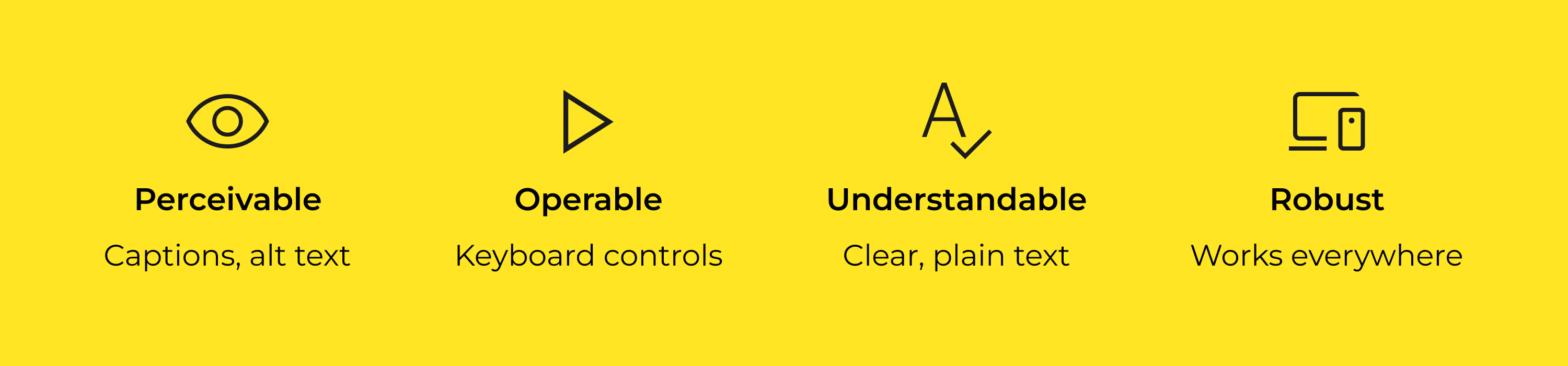
The Web Content Accessibility Guidelines require content to be:
- Perceivable: Presented in ways that everyone can access and understand, including text alternatives for visual or audio content.
- Operable: Users should be able to navigate and interact with content easily, whether they're using a mouse, keyboard or assistive technology.
- Understandable: Clear, consistent and easy to follow, with instructions that are simple to understand.
- Robust: Content should work reliably across different devices, browsers and assistive technologies.
By converting video into readable text, transcripts make content accessible to users who are deaf or hard of hearing, as well as those who prefer reading over watching. This ensures that more people can engage with the full meaning of your video. You can read more about this in our guide to content accessibility and Web Content Accessibility Guidelines.
Turning transcripts into new content assets
Transcripts are often treated as a production by-product. In reality, they're one of the most valuable assets in the entire content lifecycle. Once a video is converted into structured text, it becomes much easier to repurpose across a wide range of platforms, unlocking new revenue streams in the process — essential for resource-stretched media organizations.
Key quotes can be pulled for articles, social posts and newsletters, without having to revisit footage, improving speed and consistency across outputs. This helps to improve discoverability. The more ways content can be repurposed, the more opportunities it has to be discovered. Each new format, whether it's an article, social clip or archive piece, creates additional entry points that make the original video easier to find.
Structuring transcripts for readability & SEO
A transcript is most valuable when it is easy to read and interpret. Inaccurate and poorly structured text can limit how effectively search engines, AI tools and newsroom teams are able to extract meaning from video content.
Here are practical ways to structure transcripts for better SEO and discoverability:
Use clear speaker labels
If you don’t know who’s speaking, neither will your audience – and neither will search engines or AI tools.
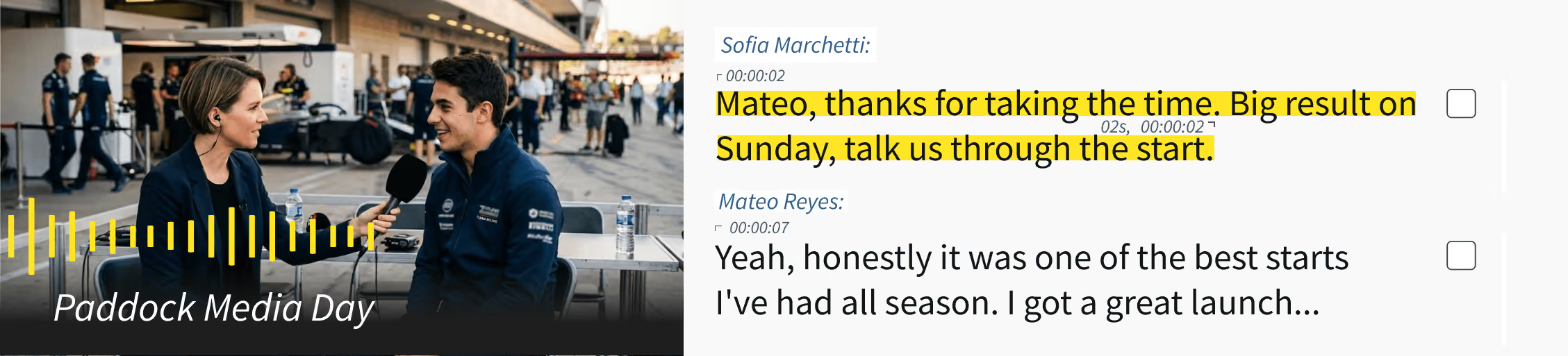
Always identify speakers and keep the format consistent throughout the transcript. Whether it’s a one-to-one interview or a chaotic panel discussion, clear speaker labels help everyone follow the conversation.
For news organisations, this is especially important. Accurate attribution makes it easier to verify quotes at speed, while also helping search engines and AI tools understand exactly who said what.
Add timestamps for key moments
No one wants to scrub through a 45-minute interview looking for a single quote.
Timestamps make long transcripts easier to navigate, helping users jump straight to the moments that matter. This is especially useful for long-form content such as interviews, press conferences or panel discussions.
They also add useful structure for search engines and AI systems when processing longer content. By breaking a transcript into time-based segments, timestamps help clarify where topics change and how different parts of the conversation connect, improving how the content is understood and retrieved.
Keep punctuation clean and consistent
Punctuation helps convey meaning. Without it, transcripts can become difficult to interpret, especially when dealing with multiple speakers or lengthy discussions.
Well-punctuated transcripts are easier to read, quote from, and easier for AI systems to understand. Small details such as commas, full stops and question marks help create clearer context around statements and ideas.
Correct any transcription errors
A quick review of your transcript can help ensure names, locations, organizations and specialist terminology are captured accurately. This is particularly important for newsrooms and broadcasters, where precision and attribution matter.
It's also beneficial for SEO and discoverability. Search engines rely on accurate text to understand content. Correct spelling and terminology can improve how content is indexed and surfaced, making it a more reliable source for reporting.
Include summaries and key takeaways
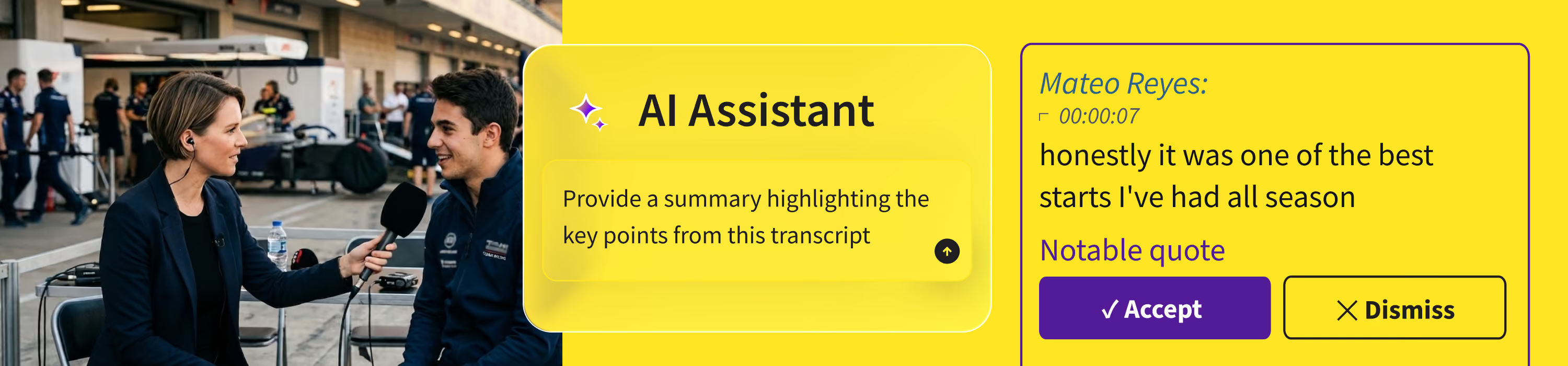
Adding a short summary above a transcript gives search engines a concise overview of the content. It also provides another opportunity to incorporate important keywords and topics naturally. Our AI Assistant extracts insights and highlights the strongest parts of a story, ready to turn into a publishable brief in an instant.
How AI accelerates transcript-driven content creation
AI is changing the content creation game. Instead of treating transcription as a manual, time-consuming step in your workflow, AI-powered tools like Trint turn it into the starting point for faster, more scalable content creation.
At the core of this shift is speed. Once a video is uploaded or captured live, Trint generates an accurate transcript in minutes, allowing editorial and content teams to start working while production is still in motion. Your transcript doc will add speaker labels and timestamps automatically, and is fully editable to ensure spelling and terminology are 100% accurate.
From there, the transcript becomes a flexible working asset. Teams can search across the full text instantly to find key quotes, moments or topics without scrubbing through hours of footage. The same transcript can also be used to generate broadcast-ready captions from a single source.
Working internationally? Trint's AI capabilities also support translation and localization, so transcripts can be converted into multiple languages quickly.
Beyond creation, transcripts become easier to organize and reuse. With everything stored as searchable text, teams can quickly surface older interviews, press conferences or archival footage and turn them into new content formats. This supports everything from news coverage to evergreen editorial planning.
In practice, this means less time spent on manual, repetitive tasks and more time focused on storytelling. You can also explore how this fits into wider newsroom workflows via Trint for newsrooms.

As search evolves, the value of transcripts continues to grow. The question is, can your newsroom afford to miss out? An AI-powered transcription tool like Trint can make a real difference. By turning video into accurate, searchable text, Trint helps teams expand their search footprint and drive more views. Book your demo today to find out how we can help you.
Looking to take your video strategy further? Explore our video SEO guide for more practical tips on improving visibility, rankings and discoverability across search and AI.




Datch Datchens
DON'T take our word for it
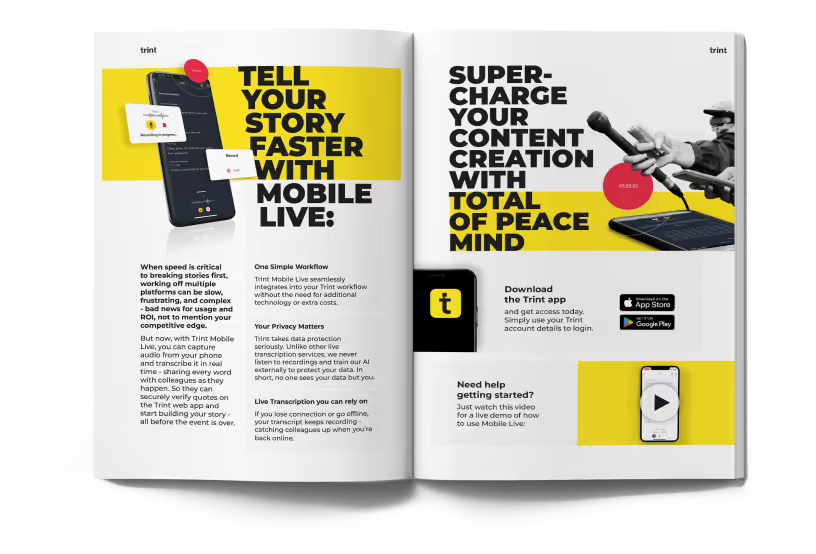
Download our eBook, Telling Stories Faster With Trint, and hear how Trint is making content creation faster, easier and, most importantly, painless for newsrooms across the world.
Download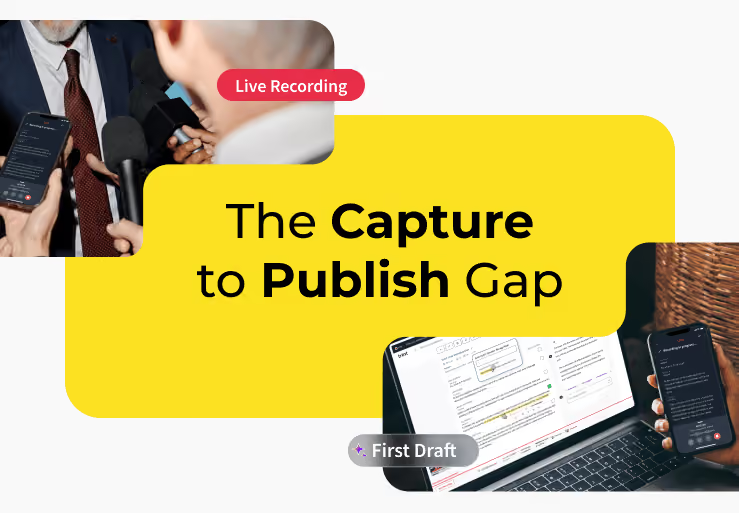
How newsrooms are using AI to bridge the capture-to-publish gap

What Is an SRT File & How Do You Create One?