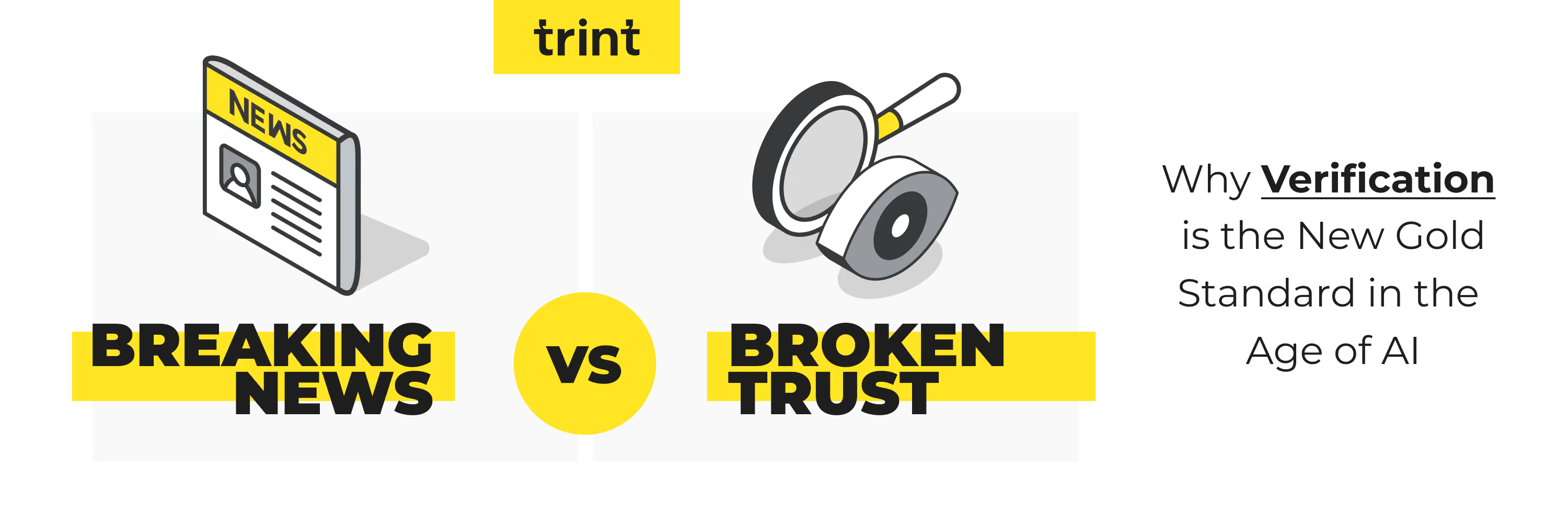
For decades, the golden rule in the newsroom was simple: be first. Get the scoop, break the story, beat the competition by seconds. Speed was the primary currency of modern journalism.
But the information landscape has shifted violently. We have entered the era of generative AI, deepfakes and synthetic media – an endless deluge of "AI slop" that blurs the lines between reality and fabrication.
In this new world, being first is no longer enough. In fact, rushing to be first without rigorous checks is now a liability. The new imperative for newsrooms isn't just breaking news; it’s verifying news before it breaks you.
The pressure on digital desks is unimaginable. Social media feeds move faster than any wire service, often filled with eyewitness videos, leaked audio and breaking claims. The temptation to take a viral piece of content and run with it is immense.
But there is also a massive acceleration in synthetic media that looks and sounds terrifyingly real. We are past the point of obvious photoshop jobs and instead facing real-time voice cloning, hyper-realistic AI imagery and convincing deepfake videos.
When mainstream media succumbs to the need for speed over verification, the damage to public trust is catastrophic.
We’ve seen this play out repeatedly, even before the current AI boom accelerated the problem:

In an environment saturated with synthetic noise, audiences are desperate for a signal they can trust. Accuracy is the only thing that differentiates legitimate journalism from the slop.
Newsrooms cannot afford to slow down. The news cycle won't wait. The challenge, therefore, is to speed up the verification process so it matches the speed of the news feed.
This is where news gathering changes. We need tools that allow journalists to act as immediate gatekeepers, not just relayers of information.
This is the core mission of Trint Live.
Trint Live is built for the pressure cooker of breaking news. It takes live audio and video feeds – from press conferences, political speeches, unfolding crises or field reporting – and turns them into interactive, searchable transcripts in real-time, with a delay of just seconds.
Here is how Trint Live helps newsrooms shift from "breaking first" to "verifying first":

Verification shouldn't happen in a silo. Trint Live allows the entire newsroom team to access the same live feed simultaneously. Editors on the desk, producers in the control room, reporters in the field on their mobile devices. Everyone sees the same words appearing as they are spoken.

A quote can be explosive. But without context, it can be misleading. When a controversial statement comes through a live feed, a producer using Trint doesn't have to wait for the event to end to rewind. They can click the text in the live transcript and immediately hear the corresponding audio playback. Was it sarcasm? Was it a mis-speak? You know instantly.
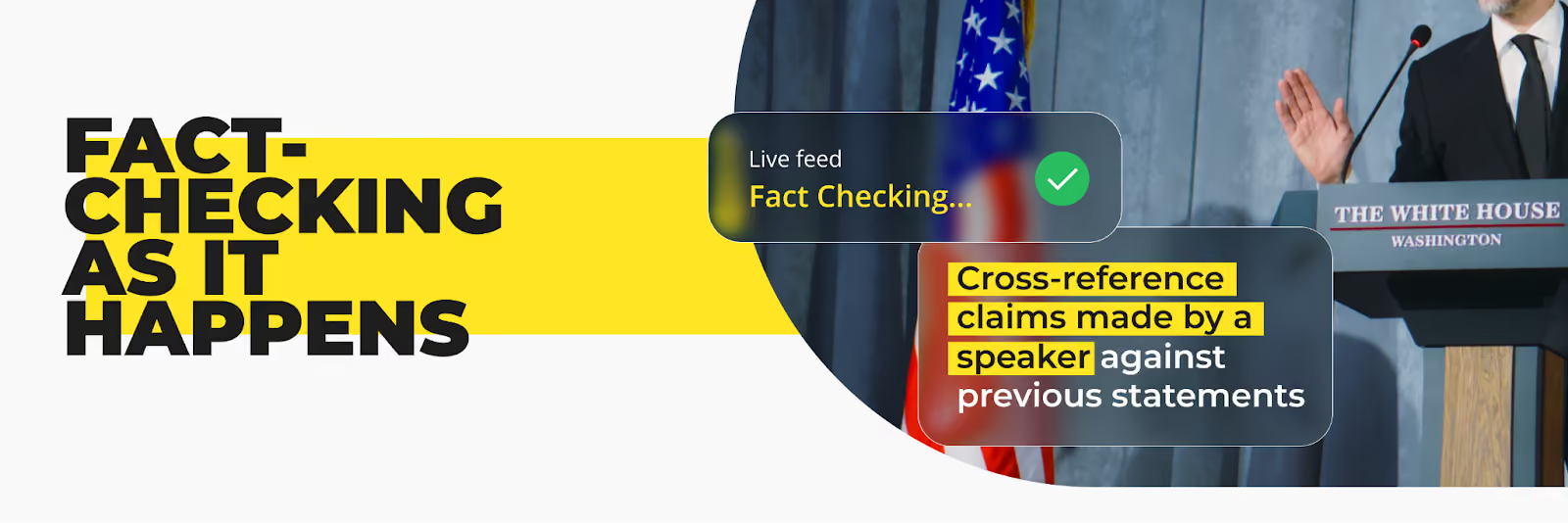
While one reporter is drafting the breaking news alert, another can be using Trint’s search function within the live feed to cross-reference claims made by a speaker against previous statements, ensuring that what goes out on the wire is not just what was said, but what is true.
Global news agencies understand this pressure better than anyone. They are the source material for thousands of other outlets. If they get it wrong, the world gets it wrong.
Global news leader Agence France-Presse (AFP) utilizes Trint to handle the massive influx of audio and video they process daily. By using Trint, AFP journalists can quickly pull accurate quotes from live press conferences and interviews, ensuring that their swift reporting maintains the high standards of accuracy their reputation is built on. They use Trint not just for speed, but for the confidence that speed won't compromise the facts. You can read more here.
The era of "publish first, correct later" is over. In the age of AI slop, a correction is an admission that your verification armor was pierced by synthetic media.
We have to be fast. But more importantly, we have to be right. Trint Live gives newsrooms the power to do both, turning live feeds into verified facts, together, in real-time.