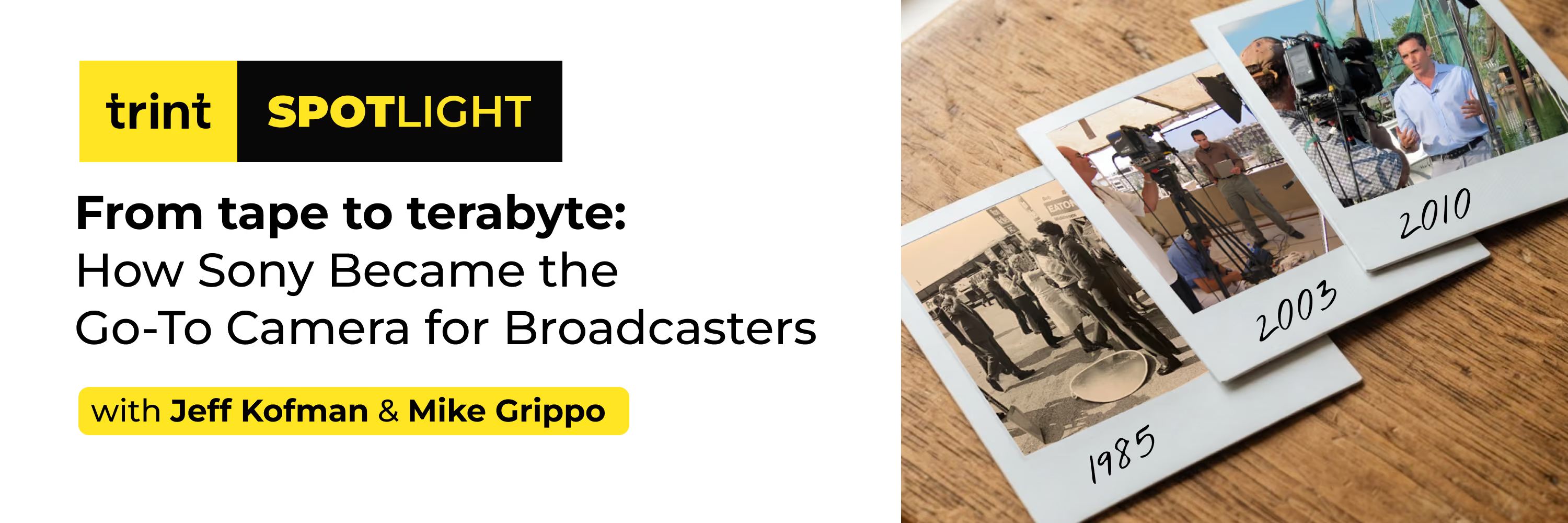
I caught up with Mike Grippo, a friend and cameraman I’ve known since we were both starting out at Global News in Toronto in the early 1980s. We talked about our shared history and discovered something that connected both of our experiences throughout – Sony Cameras.
Back in the days long before Trint existed, I spent more than 30 years as a broadcast journalist, working for Global News in Toronto, CBC News, CBS News in New York and ABC News in Florida, Latin America, the Middle East and London. When I look back on my career, there’s one thing that comes up every time: I never worked on anything but a Sony camera. And it’s the same for Mike, who’s been shooting professionally since 1981 and he’s still shooting now. Mike figures he has spent over half a million dollars on cameras over 30 years as a freelance cameraman. I’ll let you guess which brand of camera he chose every time.
Let’s start by taking you back to when our careers began as eager young TV journalists. Global News in the early 80s was the news superstation in Toronto. It had a reach across Southern Ontario, the major population center in Canada. It was the scrappy station that took on established networks saying “we want to do things differently”. With excellent news anchors and a smart team, it really was a golden age.
Like every newsroom until the 1980s, Global shot its news stories on 16mm film. By today’s standards it was incredibly limiting. Processing time of an hour or more meant there was no quick turnaround. (If you want to understand what news was like in the days of film I had a fascinating conversation with ABC’s Ted Koppel about reporting on the Vietnam war on 16mmm film on my podcast StoryTech).
I missed those film days at Global by a matter of months but I remember walking past the newsroom's abandoned film lab as they ripped out the Steenbeck film editor (a hulking thing that looked like the cockpit of an airplane). Mike caught the tail end of that era, working as a soundman on film for a year and a half before video entered the scene.
It might be a good thing I missed the days of film as a young reporter. As an inexperienced reporter I had a tendency to let my interviews ramble on, so much so that a brilliant cameraman at Global used to tell me and other greenhorn reporters: “You’d have died in film.” It makes sense because on film you had two 400-foot magazines per story – they were eight minutes per magazine – so you really only had 16 minutes of raw footage for a story: images, interviews, the reporter on camera. That left no margin for error or unfocussed interviews. The arrival of videotape liberated us from film’s built-in pressure to be economical. For better and for worse.
What replaced 16mm film for Mike and me was Sony’s U-matic system. A two-piece rig with the camera and a separate recording deck connected by a cable. At 35-45 pounds they were heavy and clunky. We used to call it the “Two-Ton Pencil.” But the U-matic was a revolution in broadcasting: the first Sony professional video camera released for use in the world.
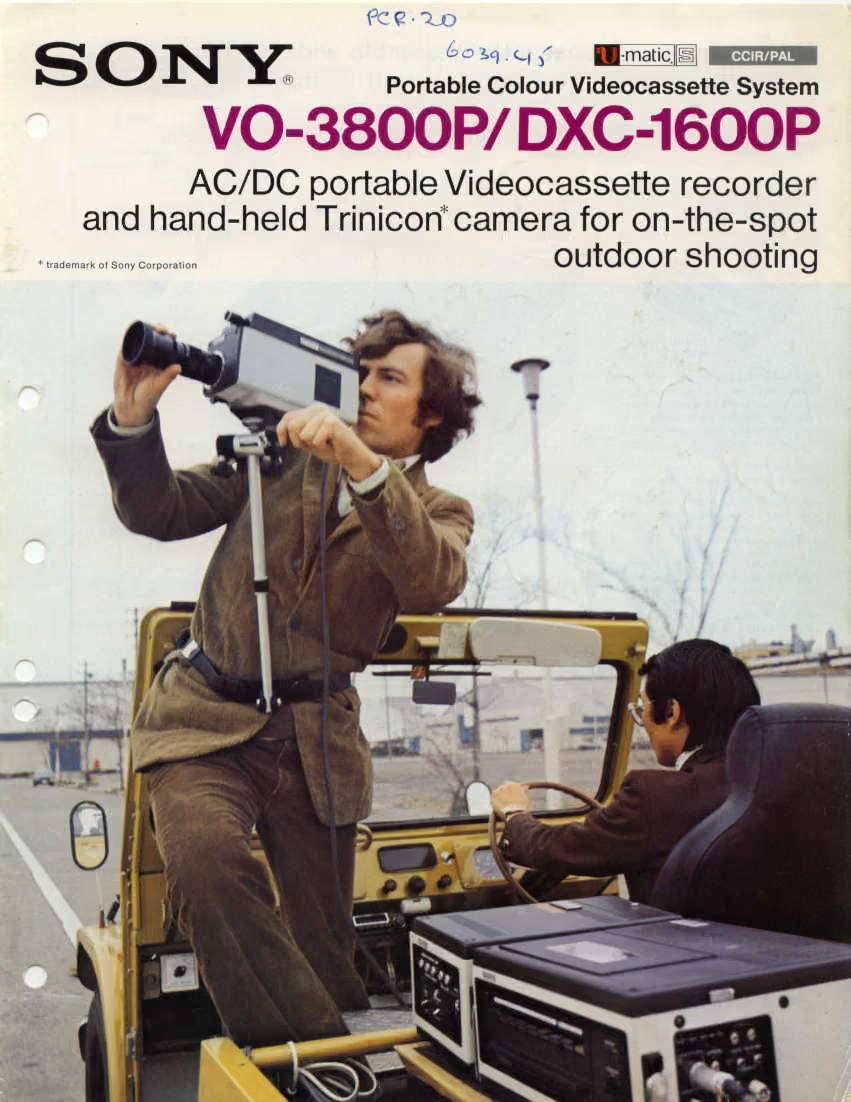
While a revolution at the time, the first video cameras really did have limits. The first video cassettes were analog: magnetic tape would record and play back pictures and sound as continuous physical waves, a long way from the digital data of today. In real terms that meant the video degraded every time it was dubbed over for an edit. You couldn’t get past two dubs before the story started to look rough, so there was real pressure to get the edit right the first time. We learned to live with unsightly “video tears” that made the images on the screen look like they were torn or falling apart.
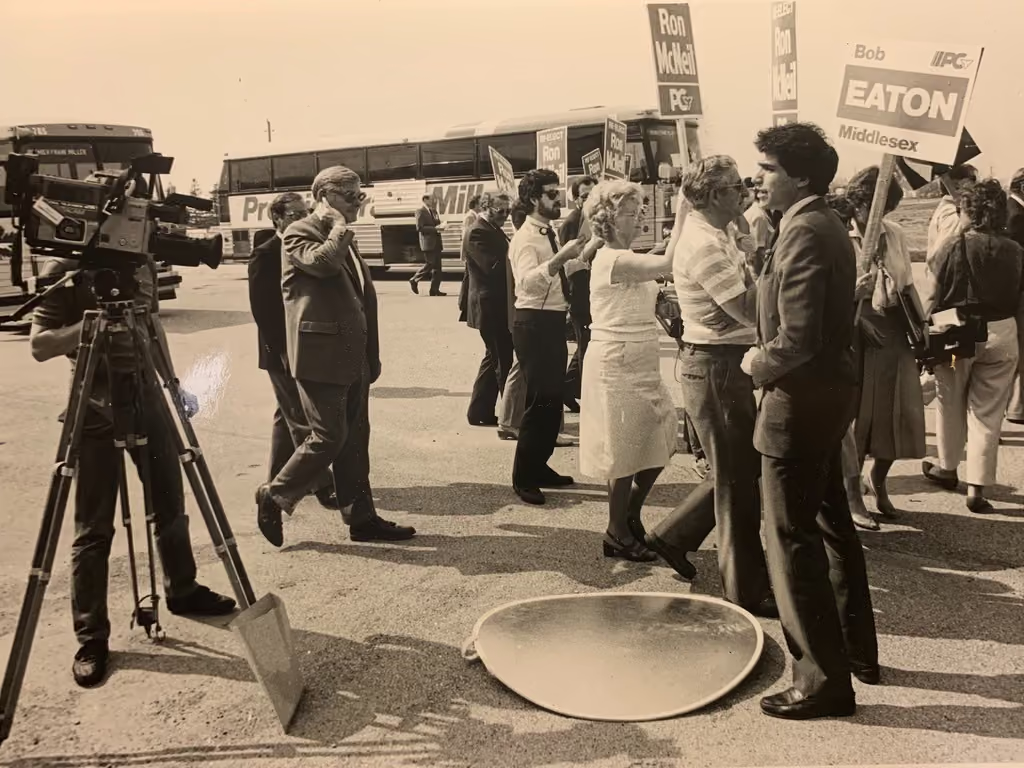
The faded black and white photo below is the first photo I have of my television career. In it you can see me talking to the next generation of Sony cameras: the Betacam.
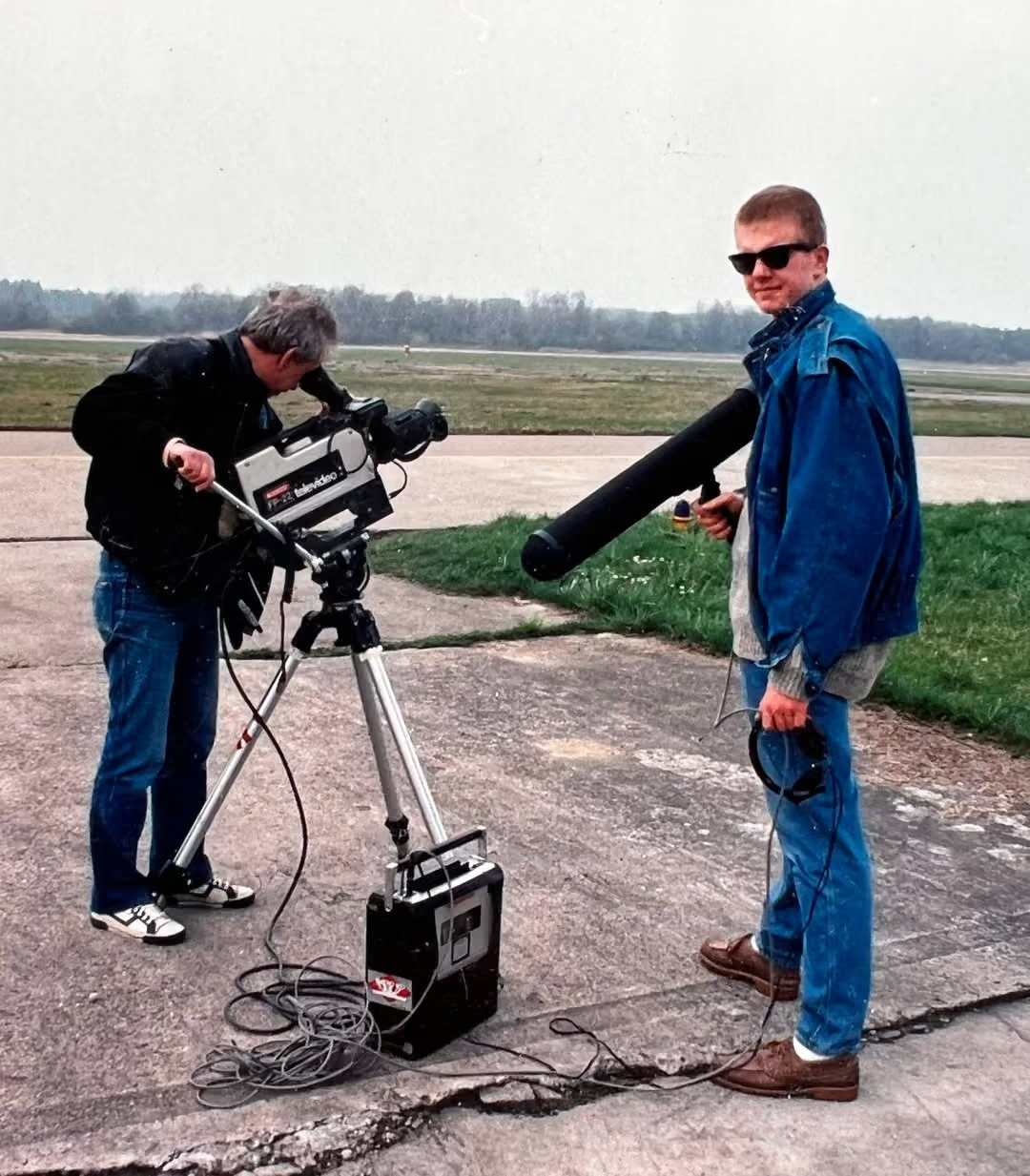
At Global News in Toronto, we were really proud to be one of the first newsrooms in the world to be using this technology – the Betacam. In the 80s, the single-tube Betacam was the next revolution in broadcasting: a camera with the lens and recorder fused into a single unit. The bulky ¾” video cassettes gave way to more compact 1\2” Betacam cassettes.
Note the wooden tripod that weighed close to 20 pounds. You can’t see the cameraman’s heavy battery belt – it looked like an ammunition belt – it powered the light above the lens. All of this paraphernalia was the unglamorous side of the business in the 1980s. We were all glorified pack horses.
By the time I got to CBC in 1986, Sony had tackled a lot of the limitations with the introduction Betacam SP. Better tape, three tubes instead of one and a real jump in picture quality that carried the industry through most of the next decade.
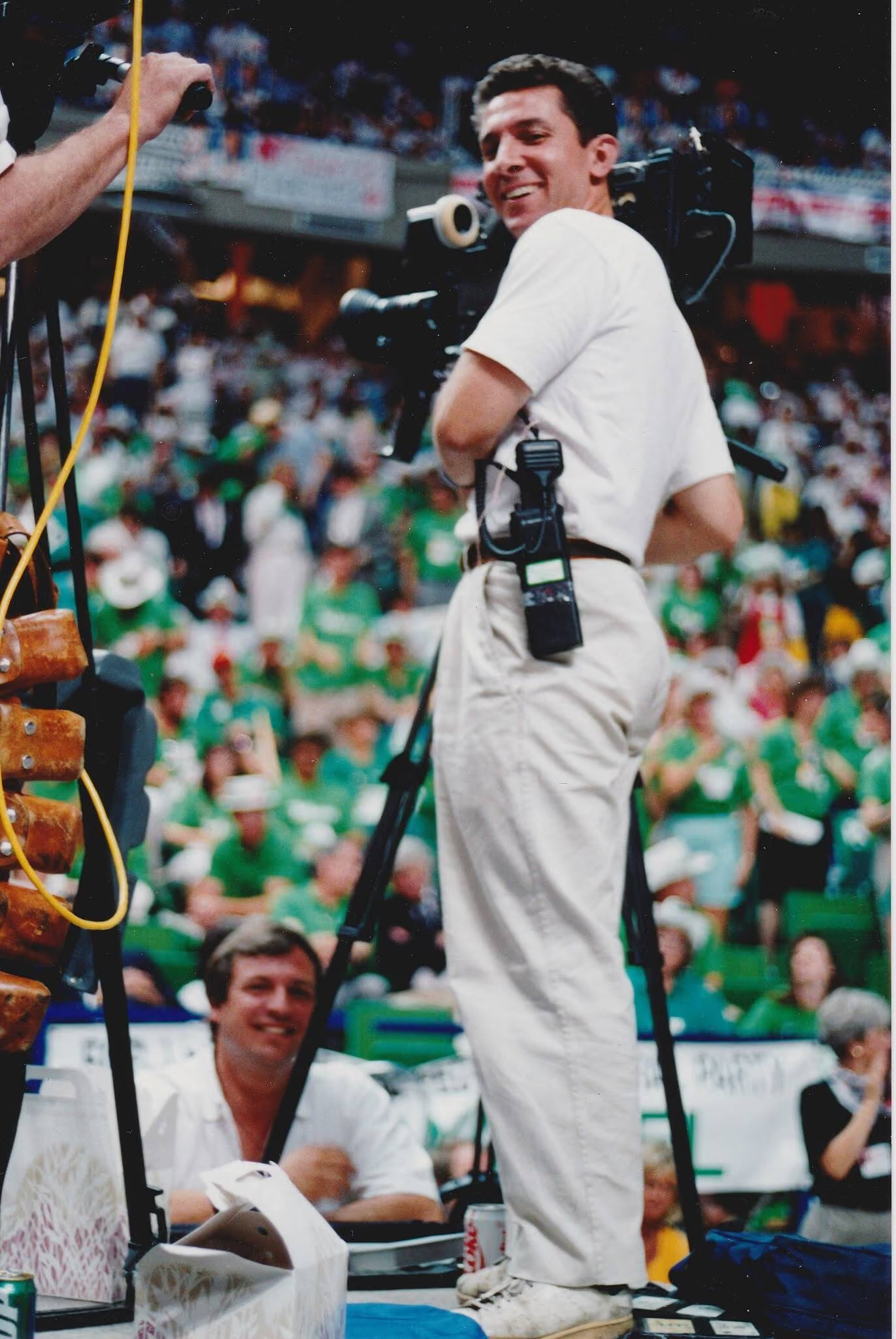
Then, in the early 90s, video stopped being magnetic altogether and became bits and bytes – digital tape that didn’t degrade no matter how many times you copied it. That mattered more than it might sound, because newsrooms were doing more live hits than ever before, and if a shot failed, the backup recording had to be flawless enough to pass for live. From there, the chain runs pretty directly to where broadcast television is today: digital tape gave way to HDCAM and true high definition – crisp, almost lifelike pictures – and then tape itself gave way to disc.
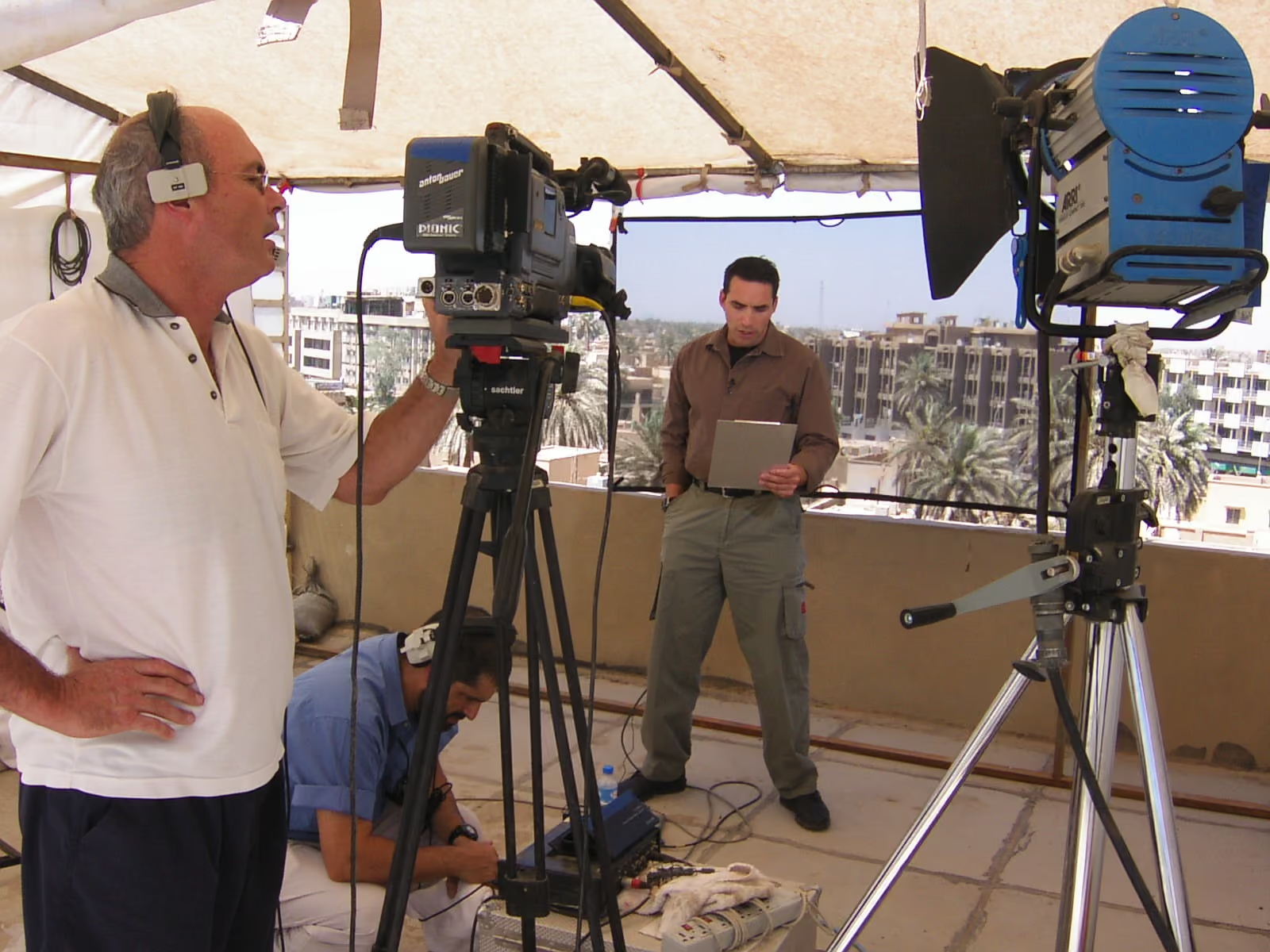
By 2003 Mike and I were in Iraq filming on Sony XDCAMs, with a memory disc that looked like a CD-ROM. Discs didn’t last long, maybe five to seven or eight years in the newsroom before memory cards took over. And even in this space, Sony ran it the way they’d run tape. They created their own proprietary cards, built for their own cameras.
“Every time something changed, as long as you changed with it, you were okay,” says Mike.
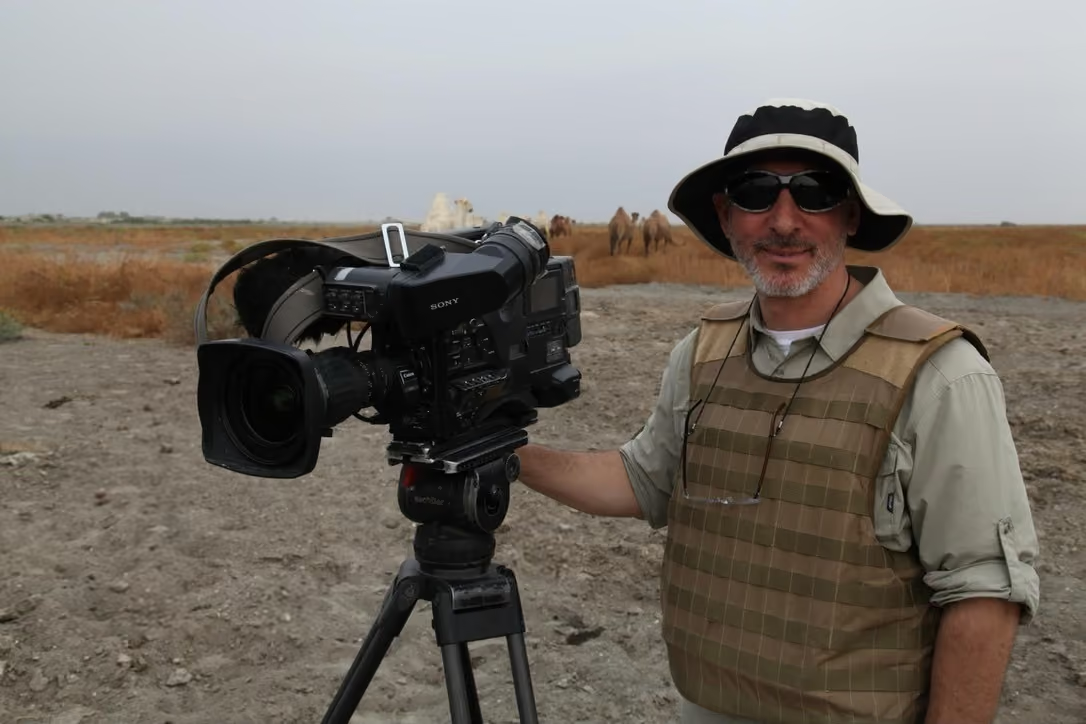
Forty-five years after Mike picked up his first professional camera he can remember every generation of video camera Sony released. It’s more than a story about brand loyalty. It’s about a company that seemed to understand, earlier than its competitors, what innovations broadcast cameras needed to to keep being relevant and useful. Sony quietly kept building the next thing before anyone even asked for it.
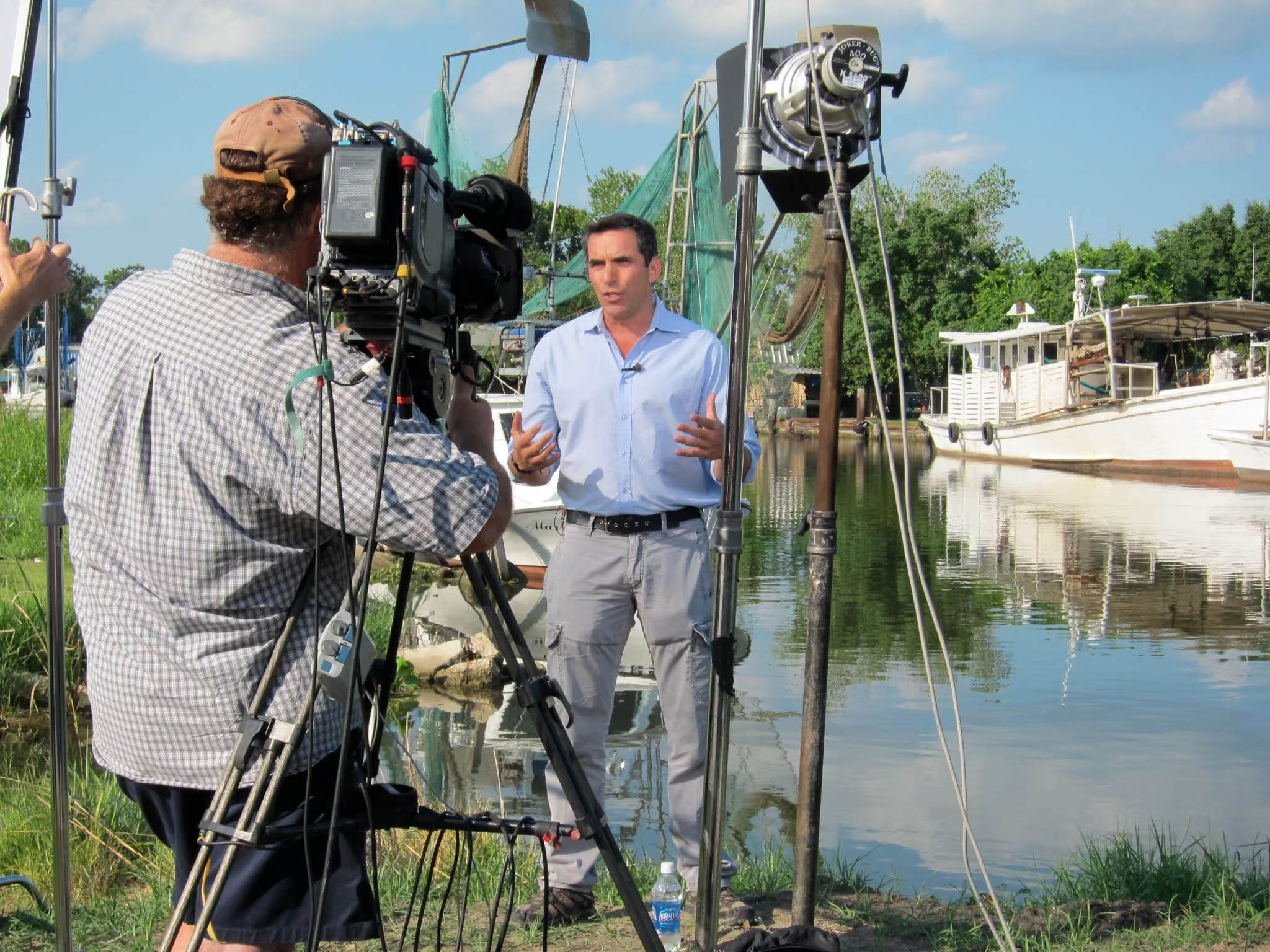
That’s also why what’s happening now with Trint and Sony is still hard for me to process. I never set out to build a technology company. I built Trint because I got tired of transcribing my own interviews by hand and knew there had to be a better way. A decade later Sony approached Trint about putting our software into the next generation of Sony cameras connected to the cloud. It is a real full circle moment. The future is coming: feeding straight into the cloud through Sony’s own gateway, turning footage into searchable, editable text the moments after it’s shot.
It’s all happening on the next generation of cameras I stood in front of for 30 years. It feels, in the truest sense, like the story coming full circle.